
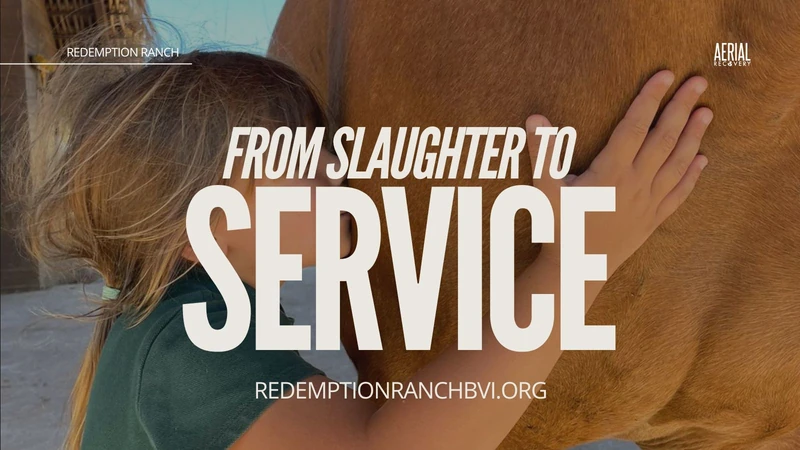
Redemption Ranch is a special place of healing and rebirth. Some of the horses now living there were days away from being destroyed. Abandoned, neglected, or sent to slaughter, they had been written off.
Today, those same animals are helping children regulate their emotions, helping abuse survivors reclaim a sense of safety, and helping veterans rediscover purpose. They are the foundation of a structured, neuroscience-backed equine program that is quietly strengthening resilience across the British Virgin Islands.
Redemption Ranch, an initiative of Aerial Recovery, provides free trauma-informed programming to some of the most vulnerable members of the Tortola community, and the transformation happening there mirrors a much larger mission.
In 2017, Hurricanes Irma and Maria devastated the British Virgin Islands. The physical destruction was staggering. But even after structures were rebuilt and power restored, something lingered, difficult to see and harder to fix.
Years later, many children and families across the territory continue to carry the invisible weight of that disaster: hypervigilance, anxiety, emotional dysregulation, and a deep loss of perceived safety. These aren't dramatic symptoms. They're quiet ones, the kind that reshape how a child responds to stress, how a family communicates, and how an entire community recovers.
"After Irma and Maria, we saw firsthand how disaster reshapes not only the community, but the nervous system," says Britnie Turner, who founded what is now Aerial Recovery in direct response to those storms. "You can rebuild buildings quickly. Rebuilding internal stability takes longer and it requires intention."
Redemption Ranch was built to address exactly that. So, why Horses? The program isn't built on sentiment. It's built on neuroscience.
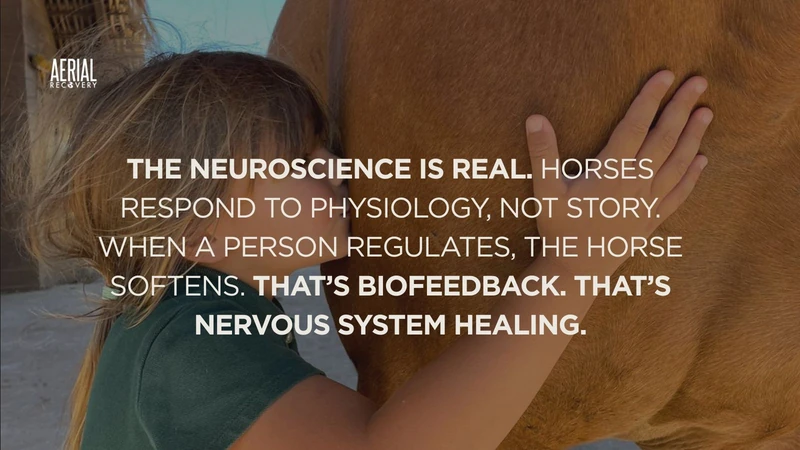
Horses are prey animals with highly developed limbic systems, making them acutely sensitive to changes in breathing, posture, and emotional state. Clinical research in equine-assisted therapy has demonstrated measurable outcomes: reduced cortisol levels, improved emotional regulation, increased social engagement in children with PTSD and autism spectrum disorder, and strengthened executive functioning and impulse control.
What makes the horse-human interaction so effective is its immediacy. Horses don't respond to words, status, or backstory. They respond to physiology. If a person approaches in a dysregulated state, tense, anxious, emotionally flooded, the horse reacts. If that person learns to slow their breathing and stabilize their posture, the horse softens. The feedback loop is real-time, embodied, and impossible to fake.
"Horses don't care about your past to you, they respond to your nervous system in real time," Turner explains. "When a child realizes they can regulate themselves and see a 1,200-pound animal respond, it rewires something internally. That's not symbolic. That's neurological."
Every equine at Redemption Ranch was previously abandoned, neglected, or headed for slaughter. Each one has been rescued, rehabilitated, retrained, and integrated into structured therapeutic and leadership programs.
That arc, from discarded to purposeful, is the same story Aerial Recovery tells through its Heal the Heroes initiative, which helps struggling veterans and first responders heal, rediscover mission, and deploy into humanitarian operations around the world. Many of those veterans once believed the world would be better without them. Now they are saving lives.
The same architecture exists at the ranch. Animals once thrown away are now healing people. Humans who once felt broken are being rebuilt and given purpose.
"One of the statements we teach children here is: 'One person's opinion of you does not have to become your future,'" Turner says. "These horses were once considered disposable. Now they are helping people feel safe again. We've seen the same redemption in veterans who once felt forgotten and are now rescuing others."
Redemption Ranch provides all of its therapeutic programming free of charge. The ranch serves local schools and youth groups, neurodiverse children and special needs communities, women and families impacted by abuse, veterans and first responders, and student service programs.
Programming is structured around core developmental areas: emotional regulation, boundary-setting, leadership and responsibility, nervous system stabilization, and restoring a sense of safety in the body.
The ranch's growth reflects something important about the British Virgin Islands itself, a community willing to embrace innovative, experiential approaches to resilience and youth development. Local schools, youth organizations, and families participate regularly, and the territory's openness to trauma-informed programming has allowed the ranch to become a meaningful part of the broader community ecosystem.
Disasters leave two kinds of damage: the visible kind gets rebuilt, and the invisible kind, trauma embedded in nervous systems, in family dynamics, in a child's sense of safety and requires something different.
Redemption Ranch serves as preventative mental health infrastructure for the British Virgin Islands. By investing in regulation, confidence-building, and leadership development early, the ranch is contributing to something larger than individual healing. It's building long-term community stability.
"When you regulate a child's nervous system, you change their trajectory," Turner says. "When you restore purpose to someone who felt discarded — whether that's a horse or a veteran — you strengthen a community. That multiplication effect is how resilience is built."
Redemption Ranch is an initiative of Aerial Recovery, a veteran-led nonprofit organization whose mission is to save lives and stop evil. All community therapeutic programs are offered free of charge.
Learn more at RedemptionRanchBVI.org
Follow on Instagram: @RedemptionRanchBVI


